DIY Garage Door Installation: Step-by-Step Homeowner’s Guide
Published: Dec 18, 2025
A DIY garage door installation can look like a solid way to save money, especially for hands-on homeowners. Still, installing a garage door involves heavy parts, tight tolerances, and safety risks that aren’t always obvious at first glance. Based on common issues we see in the field, Up & Down Garage Doors created this guide to explain what the installation process involves, how to prepare properly, and when it’s smarter to call a garage door professional.
Important Preparation Before You Start
Preparation is the most critical part of the process. You can’t just buy a door and install it — your garage must be properly prepared.
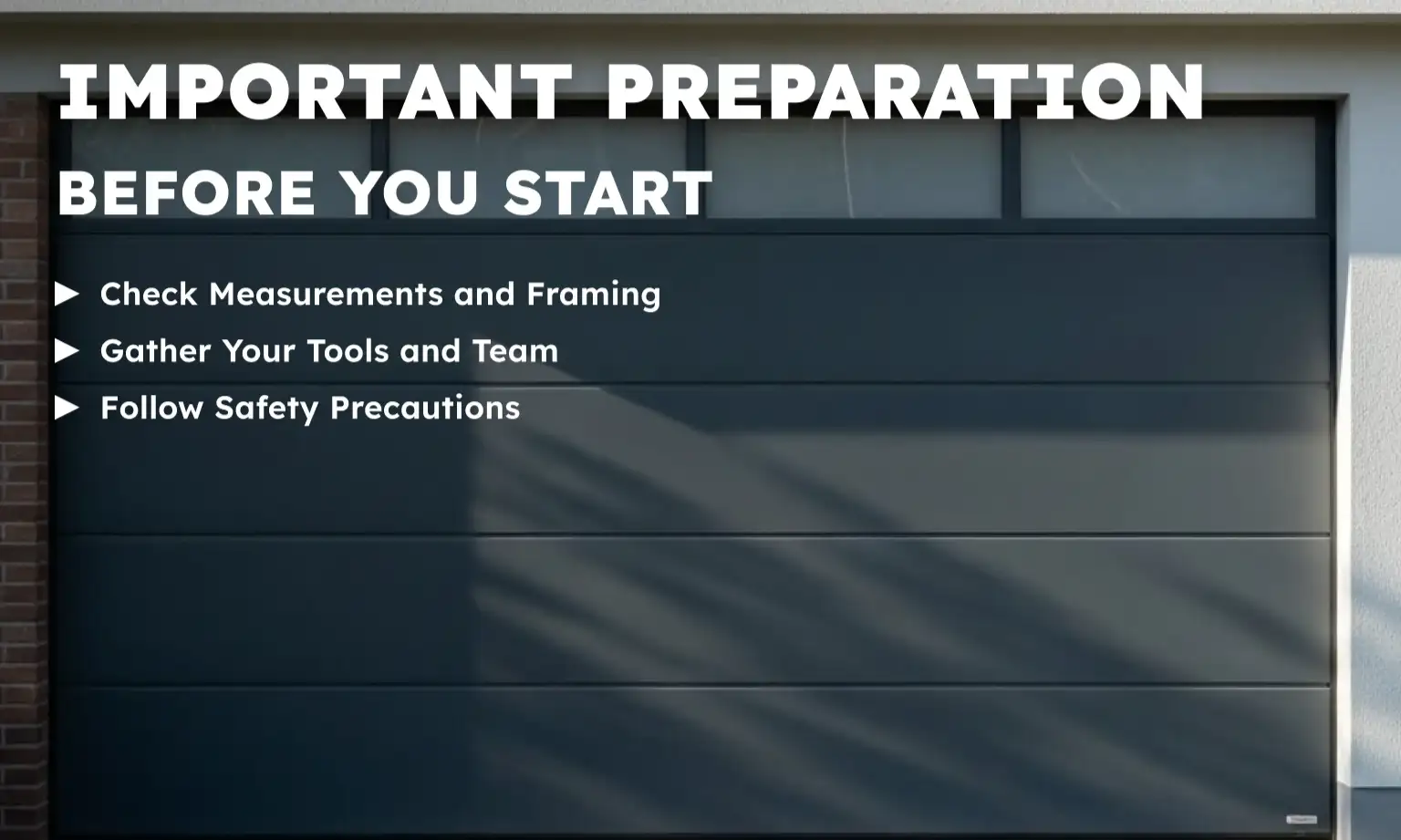
1. Check Measurements and Framing
Start by measuring the width and height of your door opening to order the correct size. You also need to check the garage door framing requirements. The rough opening must be framed with sturdy lumber to support the tracks and spring system. Ensure there is enough "headroom" (space above the door) and "backroom" (space for the door to retract) before purchasing materials.
2. Gather Your Tools and Team
You’ll need at least two people for this project — garage door panels are large and heavy, and lining them up requires steady hands. Three people are even better for safe lifting and smoother installation. If you purchased a DIY garage door kit, check that all hardware is included. You’ll also need a drill, level, wrenches, locking pliers, and torsion spring winding bars (if applicable).
3. Follow Safety Precautions
Garage door springs are under extreme tension. Mishandling them can cause severe injury. Always disconnect the power to your automatic opener before beginning a DIY garage door replacement.
How to Install a Garage Door Step by Step
Once you have your tools and safety gear ready, follow these general guidelines. Always refer to your specific manufacturer’s manual for precise details.
Step 1: Remove the Old Door
If you are replacing a door, release the tension on the old springs first. This is the most dangerous step. Once the tension is gone, unbolt the panels starting from the top and working your way down. Remove the old tracks last.
Step 2: Set the Bottom Panel
Center the bottom panel in the door opening. Use a level to ensure it sits perfectly flat. If the floor is uneven, you may need to shim the panel. Attach the weatherstripping and bottom brackets. Understanding the anatomy of a standard garage door helps identify where each hinge and roller goes during this assembly phase.
Step 3: Stack Panels and Install Rollers
Place the second panel on top of the first. Secure them together using the hinges. Slide the rollers into the hinges as you stack each section. Repeat this until all panels are vertical.
Step 4: Install the Vertical and Horizontal Tracks
Secure the vertical tracks to the door frame, ensuring they are plumb. The process of hanging garage door tracks requires precision; if they are too tight or too loose, the door will bind. Attach the horizontal tracks to the ceiling using angle iron, ensuring they are level and square.
Step 5: Secure the Spring System
This step varies depending on whether you have torsion springs (above the door) or extension springs (along the tracks). Follow instructions carefully to wind the springs to the correct tension.
Essential Garage Door Installation Tips for Success
Achieving a smooth operation requires attention to detail. Here are a few expert garage door installation tips to keep in mind.
1. Keep Everything Level
A door that isn’t level will wear out quickly or jam. Check your work constantly with a spirit level.
2. Know Your Door Type
Different doors function differently. For example, the process for how to install a roll-up garage door (often used in commercial settings) differs significantly from a standard sectional door. Make sure you are reading the guide that matches your specific hardware.
3. Don’t Force the Parts
If you are learning how to install a garage door, remember that parts should fit together relatively easily. If you have to force a track or hinge, something is likely misaligned.
When DIY Garage Door Installation Is Not the Best Choice
A DIY garage door installation may not be the right call in certain situations — especially when safety, compliance, or structural integrity are involved. You should reconsider doing it yourself if:
- The garage opening is uneven or needs framing modifications
- The door is oversized, heavy, or made of specialty materials
- You’re unfamiliar with tension spring systems or proper safety protocols
- Local codes require specific safety features, clearances, or permits
- You don’t have the tools, help, or time to complete the job properly
For commercial properties, rental homes, or any job where liability and long-term reliability matter, professional installation is often the safer choice.
Up & Down Garage Doors often steps in when DIY projects stall, become unsafe, or lead to costly mistakes. If you’re unsure, it’s better to ask than risk damage or injury. Our team can inspect your setup and help you decide the best path forward.
Need more information?
Get a free quote
Professional Garage Door Installation by Up & Down Garage Doors
Choosing professional installation often saves time, stress, and long-term repair costs. Up & Down Garage Doors works with homeowners, contractors, and property managers across the USA, delivering safe, code-compliant garage door installations that ensure long-term reliability. If you’re unsure about handling springs, tracks, or framing, scheduling a professional inspection before starting can prevent serious issues. Call today to discuss your project and get expert guidance you can trust.
Frequently Asked Questions
Can you install a garage door yourself?
Yes, you can install a garage door yourself if you have the right tools, help, and experience. However, it’s a complex task involving heavy parts and high-tension springs, so DIY garage door installation requires caution and preparation.
How to install a single garage door?
To install a single garage door, you’ll need to measure the opening, frame it properly, stack the panels, install the tracks, and carefully secure the spring system. Always follow the manufacturer’s step-by-step instructions and prioritize safety.
How to install a double garage door?
Installing a double garage door follows similar steps to a single door, but requires at least two strong people due to the increased weight and width. You'll also need additional structural support, precise track alignment, and careful handling of larger torsion springs for safe operation.
Can I install a garage door myself without experience?
It’s not recommended. Installing a garage door without experience can be dangerous, especially when dealing with spring systems. Even small mistakes can lead to injury, property damage, or costly future repairs.
Is DIY garage door replacement worth it?
DIY garage door replacement can save money, but only if done correctly. It’s worth it for experienced DIYers with the right setup. For most homeowners, hiring a pro ensures safety, proper alignment, and long-term performance.
You may also like